How to Build an Effective IT Carbon Baseline
26 October 2026
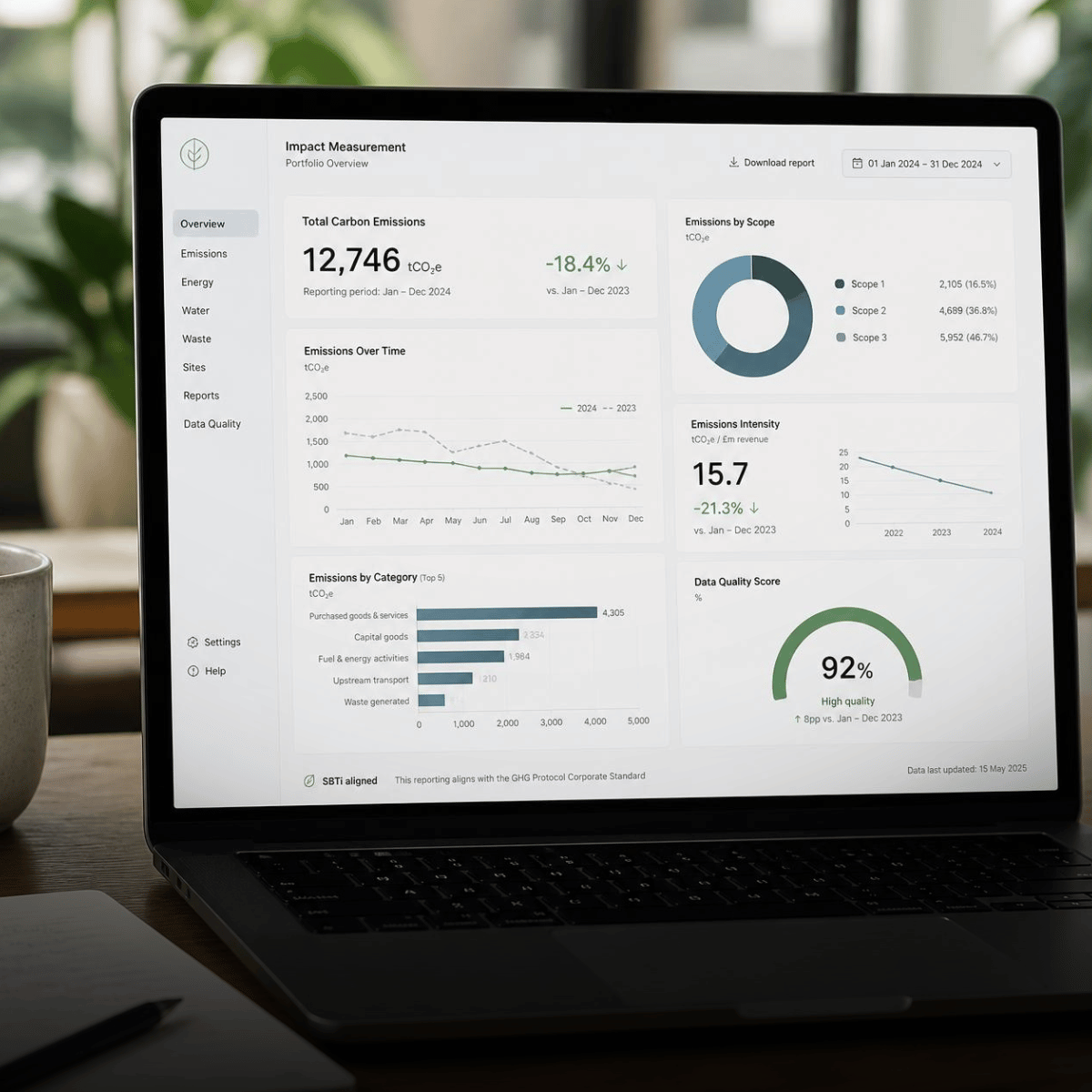
Organisations increasingly want to understand the environmental impact of their technology.
But before you can demonstrate improvement, you need to understand your starting point.
That is the role of an IT carbon baseline.
A useful baseline should do more than produce a carbon number. It should help an organisation understand where environmental impact sits across its technology estate, how reliable the underlying information is and where there may be opportunities to make better decisions.
For SMEs, the challenge is knowing where to begin without turning carbon measurement into an unnecessarily complicated exercise.
Start with the purpose
Before collecting data, establish why you are building the baseline.
Are you trying to understand the overall environmental impact of your IT estate?
Support wider organisational carbon reporting?
Respond to customer, supply-chain, tender or procurement requirements?
Improve technology lifecycle decisions?
Measure future progress?
The purpose matters because it determines what information will actually be useful.
For organisations supplying larger businesses or the public sector, credible environmental information can also support tender responses, supplier assurance and ongoing customer requirements.
Start with what you need the baseline to help you understand.
Why IT asset data matters
It is difficult to understand the environmental impact of technology without first understanding the technology estate itself.
What technology does the organisation have?
How is it being used?
How old is it?
How long is it likely to remain in service?
This is where effective IT Asset Management becomes particularly important.
Better asset visibility provides the foundation for understanding environmental impact, but it can also support better decisions around cost, utilisation, procurement and replacement.
The information does not need to be perfect before you begin.
The objective is to understand what information is available, recognise the most important gaps and improve the quality of the baseline over time.
Look at the wider carbon picture
The environmental impact of technology does not begin when a device is switched on.
Carbon emissions associated with an IT estate can span both Scope 2 and Scope 3.
Electricity used to operate technology contribute to Scope 2 emissions, while manufacturing, transportation, procurement and end-of-life impacts contribute to Scope 3.
Looking at both operational energy and the wider technology lifecycle therefore provides a more complete picture of the carbon emissions associated with the IT estate.
It also helps organisations understand where they may be able to influence that impact.
Don’t wait for perfect data
One of the biggest barriers to establishing a carbon baseline is the belief that every data point needs to be precise before the organisation can begin.
In reality, environmental information varies.
Manufacturer information may be incomplete. Asset records may contain gaps. Some calculations may need to use recognised averages or estimates.
That should not necessarily prevent an organisation from starting.
What matters is understanding the quality of the information being used, being transparent about its limitations and improving it as better data becomes available.
A useful baseline is a starting point, not the end of the process.
Measurement should influence decisions
Once an organisation understands more about the carbon impact associated with its IT estate, the next question is what it does differently.
Could suitable assets remain in service for longer?
Could existing equipment be redeployed rather than replaced?
Could better utilisation reduce unnecessary purchasing?
Should environmental information play a greater role in procurement and replacement decisions?
Could more energy-efficient technology reduce both carbon emissions and operating costs when replacement is necessary?
These are not simply carbon-accounting questions.
They are IT Asset Management, procurement, cost, risk and governance decisions.
The purpose of a baseline is therefore not simply to measure environmental impact. It is to provide information that can support better technology decisions and establish a reference point against which future improvement can be measured.
Want to go deeper?
Our October KA2 Insight Guide, Building an Effective IT Carbon Baseline, explores the process in greater detail, including defining scope, understanding asset and carbon data, accounting for lifecycle emissions, managing data quality, establishing governance and using the information to support better technology decisions.
It also includes a practical IT Carbon Baseline Checklist organisations can use to assess their current position.
Download the full October Insight Guide → here

