From Asset Register to IT Asset Management
05 October 2026
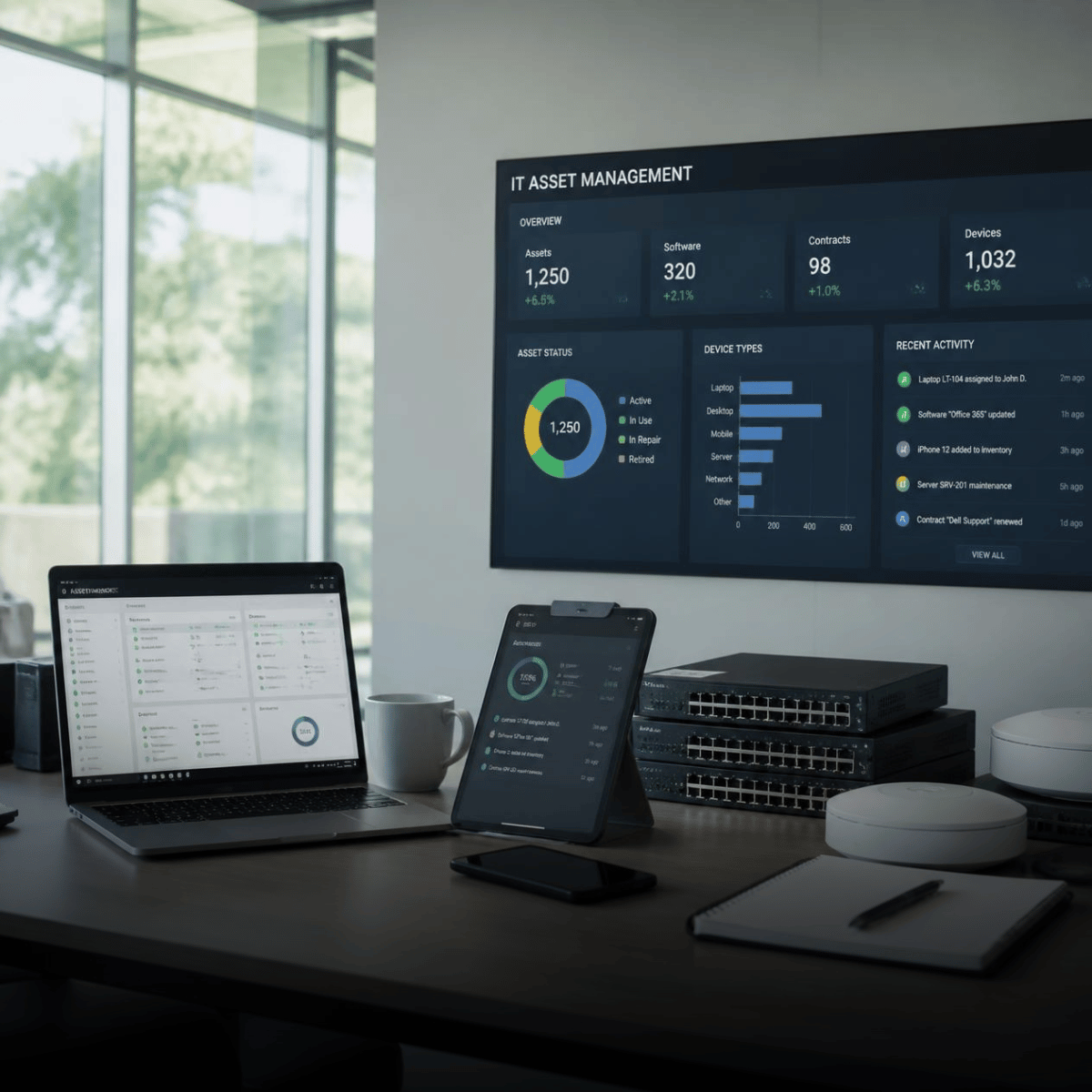
Most organisations have some form of IT asset register.
It might be a spreadsheet, a database, an IT management platform, or information held across several different systems.
It can tell you how many laptops you own, which software licences you pay for, or perhaps which employee has which device.
But having an asset register and actively managing your IT assets are not the same thing.
Effective IT Asset Management is about understanding the technology your organisation relies on throughout its lifecycle and using that information to make better decisions.
For SMEs, that distinction matters.
As an organisation grows, technology estates become more complex. More employees mean more devices. New systems are introduced. Cloud services and subscriptions accumulate. Suppliers change. Equipment moves between people and locations.
Without a clear approach to managing that environment, it becomes increasingly difficult to answer even relatively simple questions about your technology.
Start with visibility
You cannot manage what you cannot see.
The starting point for effective IT Asset Management is having a reliable understanding of what exists across your organisation.
That includes obvious information such as:
- What assets do we own or use?
- Where are they?
- Who is responsible for them?
- Who is using them?
But useful asset information goes much further.
How old is the equipment? Is it still supported? What does it cost to maintain? When does its warranty expire? What software or services depend on it? Is it being fully utilised? When should it be reviewed, upgraded, reused, or replaced?
The purpose is not to collect information simply because you can.
It is to collect the information you need to manage technology effectively.
Understand the lifecycle, not just the asset
Every technology asset has a lifecycle.
It is selected and procured, deployed into the organisation, used and maintained, potentially upgraded or reassigned, and eventually retired.
Decisions made at each stage can affect cost, risk, operational performance, and environmental impact.
For example, replacing equipment too early can create unnecessary costs and waste.
Keeping it for too long without considering performance, security, or support risks can create a different set of problems.
The right decision depends on the asset, how it is being used, and what the organisation needs from it.
Good IT Asset Management provides the information needed to make that judgement rather than relying on arbitrary replacement cycles or assumptions.
Connect assets with risk
Technology assets can also create business risks.
Unsupported hardware or software may introduce security vulnerabilities. Critical technology may depend on a single supplier. Licences may be underused or incorrectly allocated. Important equipment may reach end of support without anyone recognising the dependency.
Asset information therefore has a role within wider governance.
Organisations need to understand not only what technology they have, but where it creates dependencies and risks that need to be managed.
Clear ownership is particularly important.
If nobody is responsible for reviewing an asset, contract, licence or lifecycle decision, issues can remain unnoticed until they become operational problems.
Look beyond purchase price
Good asset information can also support better financial decisions.
The initial purchase price of technology is only one part of its cost.
Maintenance, support, licensing, energy consumption, upgrades, downtime and replacement can all contribute to the total cost of an asset throughout its lifecycle.
Understanding this wider picture can help organisations identify unnecessary expenditure, underused technology and opportunities to consolidate or extend the useful life of existing assets.
It can also improve future procurement decisions.
Rather than asking simply, “What does this cost to buy?”, organisations can begin asking, “What will this technology cost us to own, operate and eventually replace?”
Add environmental impact to the picture
There is another increasingly important dimension to IT Asset Management: environmental impact.
Technology creates emissions throughout its lifecycle, from the extraction of raw materials and manufacturing of equipment through to transportation, operation, and eventual disposal.
Carbon emissions associated with an IT estate can span both Scope 2 and Scope 3. Electricity used to operate technology can contribute to Scope 2 emissions, while manufacturing, transportation, procurement and end-of-life impacts can sit within Scope 3.
Understanding the IT estate creates an important foundation for understanding that impact.
Information about the manufacturer, model, age, location, and lifecycle of assets can help organisations develop a clearer picture of the environmental impact associated with their technology.
That does not mean every asset decision should be driven by carbon.
It means environmental information can become another useful factor alongside cost, performance, security, risk, and business needs.
Better information creates better choices
The real value of IT Asset Management is not the asset register itself.
It is what the organisation can do with the information.
Should this equipment be replaced or retained?
Could an existing asset be reused instead of purchasing another?
Are we paying for technology we no longer need?
Which assets are approaching end of support?
Where are our biggest technology risks?
Could extending an asset’s useful life reduce both cost and environmental impact without creating unacceptable operational risk?
These are management decisions, not inventory questions.
From knowing what you have to managing it well
For SMEs, IT Asset Management does not need to mean introducing layers of administration or building an unnecessarily complicated system.
It means having enough reliable information, clear responsibility, and appropriate governance to make informed decisions throughout the technology lifecycle.
Start with the basics.
Understand what you have.
Understand why you have it.
Understand how it is being used.
Understand the risks, costs, and lifecycle associated with it.
Then use that information to make better decisions.
Because an asset register can tell you what technology exists.
Effective IT Asset Management helps you decide what to do with it.
Want to understand how better IT Asset Management could support your organisation? Talk to KA2.

