The Human Factor: Why People, Culture and the Cyber Skills Gap Define Your Security Posture
15 December 2025
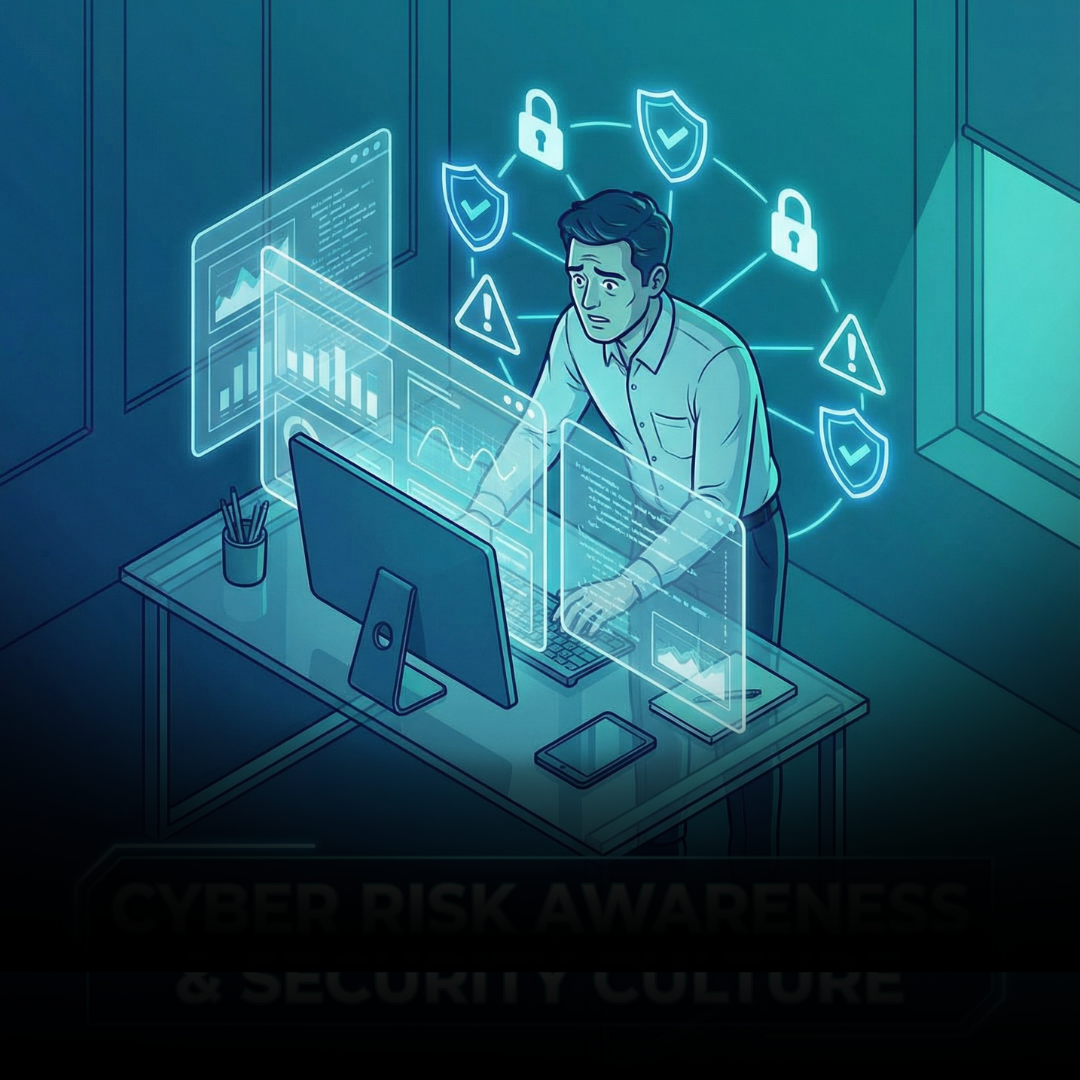
Technology Doesn’t Fail – People Do
Despite organisations investing billions in cyber security technology, the root cause of most breaches remains stubbornly consistent: human behaviour. Recent studies confirm that 82% of breaches involve human error, social engineering, or misuse. Consequently, 61% of organisations now admit that culture is their weakest security dimension. Employees are the targets, exploited by attackers who understand psychology as well as technology, using urgency, fear, and trust to deliver phishing, CEO fraud, and credential harvesting campaigns.
The conclusion is unavoidable: cyber security is no longer a purely technology problem – it is fundamentally a problem of people, culture, and capability.
The Three Layers of Human Cyber Risk
Security outcomes depend on three interconnected layers working together:
- Leadership & Culture: This sets the tone from the top through governance, resourcing, and executive secure modelling.
- Behaviour & Skills: This involves specific secure habits and role-based knowledge.
- Awareness & Education: This relies on training, phishing simulations, and continuous reinforcement.
Security Culture: The Foundation of Resilience
A strong security culture is one where secure behaviour becomes second nature, seamlessly embedded into daily work, rather than being forced through compliance mandates. In a positive culture, employees report incidents promptly, leaders demonstrate secure behaviours, and policies match day-to-day operations.
Conversely, weak cultures exhibit warning signs like high phishing-simulation failure rates, “tick box” training, and a blame culture after incidents. A strong culture reduces risk more effectively than merely buying additional technology.
The single most important influence here is Leadership. Leaders who shortcut security – reuse passwords, delay patching, ignore training – normalise poor behaviours across the organisation. Culture flows downhill.
Moving Beyond Annual Checklists
Most organisations still rely on annual eLearning modules, which fail because the training is forgotten within weeks, does not reflect real attacks, and offers no reinforcement.
Effective training must be:
- Role-specific (IT, finance, HR, developers, executives)
- Continuous (microlearning, periodic refreshers)
- Contextual (linked to real threats affecting the organisation)
- Reinforced (phishing simulations, pop-up hints, feedback loops)
Phishing simulations, when done well, are one of the most effective forms of behavioural training. Good practice requires clear communication, constructive feedback, and supportive coaching – never “gotcha” tactics or punitive measures that harm trust. This approach transforms training from a compliance exercise into empowerment.
The Cyber Skills Gap: A Structural Risk
The global cyber workforce gap is a growing structural risk, currently sitting at 3.5 million unfilled roles. This shortage creates slower vulnerability remediation, misconfigured systems, and breach escalation delays.
The shortage is driven by exploding threat volumes, complex cloud migrations, and a lack of training pathways. Organisations must shift their focus to growing talent internally, not just recruiting externally.
How We Build a Skilled, Secure Workforce
We directly support organisations in moving beyond compliance and building a strong, measurable security culture. Our services are focused on practical, role-based capability uplift:
- Security Culture Assessments: Evaluating the influence of leadership, awareness levels, and behavioural maturity across seven domains
- Training & Awareness Programmes: Delivering role-based training, microlearning, and continuous reinforcement through responsible phishing simulations
- Skills Gap Analysis & Workforce Development: Identifying capability gaps in teams and developing training pathways and Security Champion programmes to grow internal talent
- Governance Support: Integrating secure-by-design practices and effective incident reporting frameworks
- Advisory for Leaders: Helping boards and executives understand cultural and behavioural factors
- Measurement & Reporting: Providing behavioural metrics and KPIs
Conclusion
People are your most important and most targeted asset. A stronger culture means fewer incidents, faster responses, and more resilient operations. Our Security Assurance Services help you assess security culture and behavioural maturity, deliver role-based awareness programmes, run responsible phishing simulations, and strengthen leadership engagement.

